FTC Franchise Rule 2026: How to Read an FDD Before You Buy
Buying a franchise means signing a long contract based largely on what the seller tells you. That is why the Franchise Disclosure Document (FDD) exists: it is the one document that puts a franchisor's costs, history, and obligations in writing before you commit. Yet many first-time buyers skim it, or lean on a sales conversation instead.
This guide explains what the FTC Franchise Rule requires in 2026, where the rule's protections end, and how to turn the FDD into a practical checklist. Whether you are weighing a first franchise or adding a second brand, the goal is the same: verify the claims that drive your investment before you sign anything.
The FTC Franchise Rule 2026: A Quick Refresher for Buyers
The FTC first issued its Franchise Rule in 1978 and substantially revised it in 2007. At its core, the rule requires franchisors to hand prospective buyers an FDD at least 14 calendar days before the buyer signs a binding agreement or pays any money. The document must follow a standard format with 23 items, from the franchisor's business background to costs, litigation history, financial performance representations, and financial statements.
There is also regulatory activity on the administrative side. In May 2026 the FTC published a notice proposing to extend the information-collection requirements tied to the rule for three more years, with public comments due July 6, 2026. That notice concerns paperwork burden rather than new substantive obligations, so buyers should not read it as a rewrite of the rule. For context, the agency's estimates in the notice include roughly 400,000 disclosure documents distributed each year and about 240 new franchise sellers entering the market annually.
Why the 14-day rule matters: A 14-day review window is the minimum, not a target. Ask for the FDD early, and treat any pressure to sign or pay a deposit before the window closes as a red flag.
What the rule does not do
The Franchise Rule is a disclosure rule. It tells franchisors what they must share and when, but it does not guarantee that a franchise will be profitable, and it does not make the FTC a reviewer of your particular deal. A federal disclosure requirement is a floor, not a seal of approval, so the responsibility for testing the document against reality falls on you and your advisors.
The rule also does not require a franchisor to publish earnings figures. Financial performance information appears in Item 19 only if the franchisor chooses to include it. Some states add their own registration or review requirements, so ask a franchise attorney which rules apply where you plan to operate.
Why accuracy and timing matter
Every number in the FDD is something a buyer may rely on when borrowing money, signing a lease, or leaving a job. Estimates of the total investment, the time needed to open, and the financial health of the franchisor all feed directly into that decision. If any of them turns out to be optimistic, the cost lands on the owner in the form of extra rent, payroll, and loan payments before the first dollar of revenue arrives. That is why a careful buyer reads the document line by line and confirms each important statement with a second source.
The Bigger Picture: Franchising Keeps Growing, So Diligence Matters More
The enforcement story is unfolding while the industry expands. The International Franchise Association's 2026 outlook, built on FRANdata analysis, projects franchise output rising from about $907.3 billion to $921.4 billion, a gain of 1.6 percent. The same outlook projects units growing from 832,521 to roughly 845,000 and employment increasing by more than 150,000 jobs to nearly 8.9 million. The IFA highlights child services and commercial and residential services among the faster-growing categories.
More units and more new brands mean more choices, but also more variation in disclosure quality. Emerging concepts may have short operating histories, thin franchisee track records, and limited data to compare. That is exactly where a methodical FDD review pays off.
How to Read an FDD: Six Items That Deserve Extra Scrutiny
The sections below tend to carry the most weight in an investment decision. Use the table as a starting point, then read the full document with an experienced franchise attorney.
Items 3 and 4: Know who you are doing business with
Litigation and bankruptcy disclosures are designed to show whether the people behind a brand have a history that should influence your decision. Read the case summaries rather than skimming the headings, and search public court records for anything that seems incomplete. A franchisor with ordinary litigation is common in a large system. A pattern of similar claims is a reason to dig deeper.
Items 7 and 11: Pressure-test the timeline
The estimated initial investment and the typical time to open work together. If the document says a unit usually opens within six months, ask current owners how long it actually took from signing to opening day. Delays can come from permitting, construction, equipment, or approvals, and each adds carrying costs. Build a buffer into your own budget, and compare the FDD's range with real owner experience.
Item 19: Understand what earnings data does and does not show
Item 19 is where a franchisor may share financial performance information, and it is optional. A 2026 industry survey by Franchise Update Media reported that 84 percent of surveyed franchisors include financial performance representations in their FDD, including every responding brand with more than 100 units. Those figures come from franchisor self-reporting in a survey sold by a publisher, so they describe industry practice rather than verified facts about any single brand.
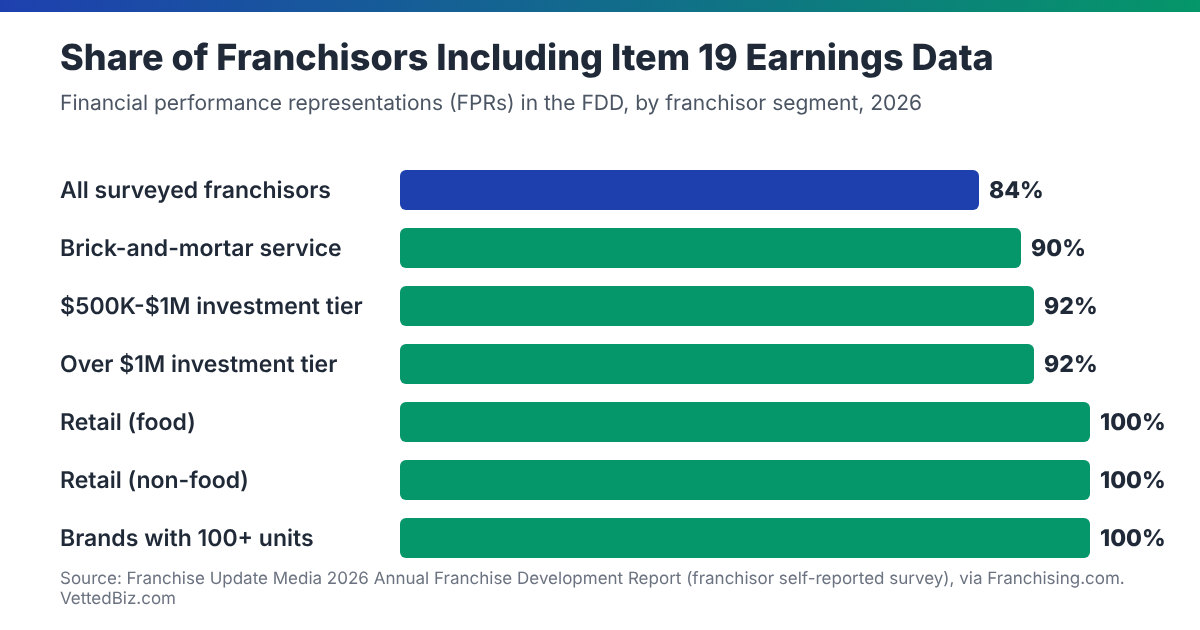
When a franchisor does provide earnings data, check whether the figures are averages or medians, whether they include only mature units, and how many locations were excluded. A strong average can hide a wide spread between top and bottom performers. If a brand provides no Item 19 at all, treat every revenue claim made in a sales conversation as unverified until it appears in writing in the FDD.
Item 20: Make the calls
Item 20 lists current franchisees and, importantly, those who left the system during the past year. Because the rule expects that contact information to be accurate, this section is one of the most useful tools you have for independent verification, and it deserves hands-on follow-up. Try to speak with at least ten owners, and make sure some of them are former franchisees. Ask the same questions of each person: how long did opening take, how did actual costs compare with the FDD, and would you buy again?
Item 21: Check the franchisor's financial health
Your investment depends partly on the franchisor's ability to support the system. Review the audited statements for cash reserves, debt levels, and unusual related-party transactions. An accountant who knows franchising can translate the footnotes into plain language.
A Practical Due Diligence Checklist
Use this sequence to organize your process and avoid being rushed:
- Request the FDD in writing and record the date you received it, along with the signed receipt page.
- Compare every figure you were told verbally against the written document, and flag any gaps.
- Contact current and former franchisees listed in Item 20, using a consistent set of questions.
- Build your own budget with a conservative opening date and extra working capital.
- Search court records and news coverage for the franchisor and its executives.
- Hire a franchise attorney and an accountant to review the agreement and financials before you pay a deposit.
- Wait out the full 14-day period and ask for updated disclosures if anything material changes.
Pro Tip: Keep a running log of every claim a franchise salesperson makes, with the date and the FDD item that should confirm it. If the document and the conversation disagree, trust the document and ask for clarification in writing.
What This Means for Different Types of Buyers
First-time owners
If this is your first business, focus on the items that directly affect cash: the investment range, the opening timeline, and the franchisor's financial stability. Funding sources such as SBA-backed loans add their own documentation requirements, so line up your lender early and share the FDD with them.
Multi-unit and experienced operators
Experienced buyers should still verify. Territory rights, development schedules, and transfer provisions can matter more at scale than a single store's earnings. Review how the agreement treats renewals, relocation, and resales, since your exit options affect the value of what you are building.
Buyers considering newer or fast-growing brands
Rapid growth can be a sign of a strong concept, but it also strains training and support. Ask how many units opened in the past two years, how many closed, and how the franchisor staffs field support. Newer systems may disclose less operating history, which makes direct conversations with owners even more valuable.
Common Questions About FDDs and the FTC Franchise Rule
Does the FTC review or approve my FDD?
No. The FTC sets the disclosure requirements, but it does not pre-approve individual FDDs, and a franchisor having a compliant-looking document is not a guarantee of accuracy. Some states run their own registration programs, so ask your attorney whether the franchisor is registered where you plan to operate and what that review does and does not cover.
Is the FDD enough on its own?
It is the best starting point, not the finish line. Pair it with franchisee interviews, independent financial analysis, and legal advice. The document is only as useful as your willingness to test it against reality.
Where can I find an FDD?
Franchisors provide it directly when you request it, and some states maintain public registries for franchise filings. Ask the franchisor for the current version and confirm it is the latest one on file.
Conclusion: Treat the FDD as Your First Line of Defense
The basic advice franchise investors have heard for years still holds: the sections that matter most for your decision are the ones that describe timelines, leadership history, closed units, and earnings. Read them closely, test them with real owners, and give yourself the full 14-day review period and more.
Ready to evaluate your options? Explore VettedBiz's franchise investment guides to compare costs, fees, and risk factors across categories, and speak with a qualified franchise attorney before signing any agreement. This article is for informational purposes only and is not legal or financial advice.
Get insider access to franchise insights
Subscribe to receive expert tips, franchise rankings, and exclusive data straight to your inbox, trusted by thousands of aspiring business owners and investors.
Franchise resources & insights
Explore expert guides, data-driven articles, and tools to help you make smarter franchise decisions, whether you're just starting out or ready to invest.