Best Senior Care Franchises in 2026: Investment Costs, Revenue, and Growth Opportunities
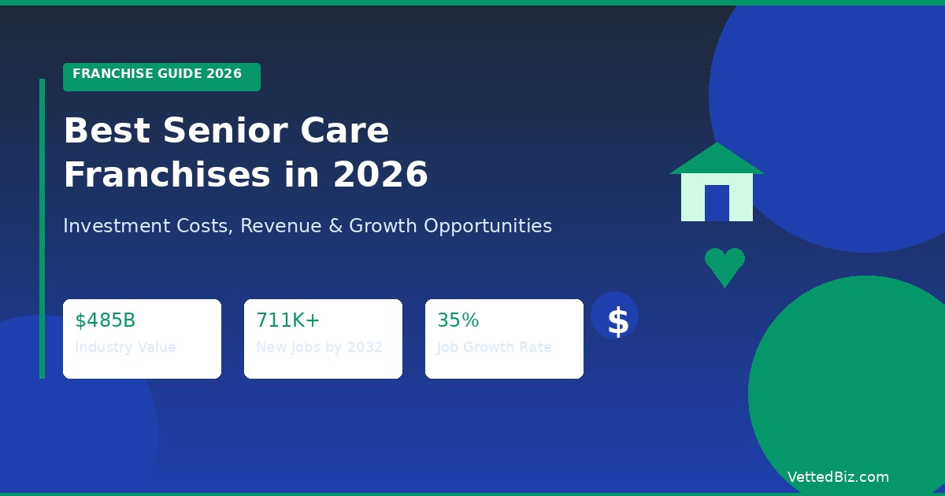
As the U.S. population ages at an unprecedented pace, senior care has emerged as one of the most recession-resistant and fastest-growing sectors in franchising. By 2030, one in five Americans will be over age 65, and the senior care industry is already valued at approximately $485 billion. For franchise investors seeking a business model built on long-term demographic demand rather than consumer trends, this sector deserves serious attention.
In this guide, we break down the top senior care franchise opportunities in 2026, compare investment requirements and revenue potential across leading brands, and explain what makes this industry uniquely positioned for sustained growth.
Why Senior Care Franchises Are Booming in 2026
The growth engine behind senior care franchises is simple: demographics. The baby boomer generation, roughly 73 million Americans, is entering the age bracket where care services become essential. According to the Bureau of Labor Statistics, home health and personal care aides will add over 711,700 jobs between 2022 and 2032, a 35% growth rate that represents the largest projected increase of any occupation tracked by BLS.
This surge in demand has translated directly into franchise expansion. The International Franchise Association projects franchise economic output will exceed $920 billion in 2026, with healthcare and senior services among the fastest-growing segments. Non-medical in-home care alone is estimated at roughly $110 billion in 2026, growing at mid-single-digit annual rates.
Unlike many franchise sectors that depend on discretionary consumer spending, senior care addresses a fundamental need. Families are increasingly seeking professional help for aging parents, whether through non-medical companion care, skilled home health services, or senior placement advisory services.
Top Senior Care Franchise Brands: A Detailed Comparison
Home Instead
Home Instead is the largest and most recognized name in non-medical senior care franchising. With over over 600 units in the United States and a global presence spanning 12 countries, the brand benefits from exceptional name recognition and a mature support infrastructure.
According to its 2025 FDD Item 19, Home Instead reports average revenue of approximately $2.2 million. The total initial investment ranges from $91,000 to $270,000, with a franchise fee of $54,000. Royalty fees run at 5% of gross revenue.
Home Instead’s strength lies in its established referral networks and comprehensive caregiver training programs. However, competition for territories in major metro areas is fierce, and new franchisees should expect a 12-to-18-month ramp-up period before reaching profitability.
BrightStar Care
BrightStar Care occupies a unique position as one of the few franchise brands offering both medical and non-medical home care services. This dual-service model allows franchisees to capture a broader range of clients, from companion care to skilled nursing.
Total investment ranges from $132,000 to $235,000, with franchise fees ranging from $25,000 to $50,000 and a 6% royalty. BrightStar’s ability to serve higher-acuity clients often translates to better margins per service hour. The brand requires franchisees to employ a registered nurse as Director of Nursing, which adds operational complexity but also creates a competitive moat.
BrightStar has earned Joint Commission accreditation, a distinction typically reserved for hospitals and major healthcare organizations, which strengthens its positioning with referral sources and insurance providers.
Senior Helpers
Senior Helpers has built a strong reputation around specialized care programs, particularly its Senior Gems Alzheimer’s and dementia care program. With over 300 locations, the brand combines personalized care planning with technology-driven operations.
The updated franchise data reports average revenue of approximately $1.3 million. Total investment ranges from $149,000 to $201,000, with a $55,000 franchise fee and 5% ongoing royalty.
Senior Helpers’ focus on cognitive care programs positions it well for a growing niche, approximately 6.9 million Americans age 65 and older are living with Alzheimer’s dementia, a number projected to rise significantly through 2050.
CarePatrol
CarePatrol operates a different model entirely: rather than providing direct care services, franchisees serve as senior care advisors who help families find appropriate assisted living communities, memory care facilities, and in-home care providers. This referral-based model eliminates the need to recruit and manage caregivers.
Total investment ranges from $65,000 to $136,000, with franchise fees ranging from $20,000 to $57,000, making it one of the most affordable entry points in senior care franchising. CarePatrol reports average revenue of approximately $192,000 and operates under an advisory model that avoids the staffing demands of direct-care franchises.
The trade-off is clear: lower investment and simpler operations, but also lower gross revenue compared to direct-care models. For first-time franchise owners or investors who prefer a consultative business over a staffing-intensive one, CarePatrol offers a compelling value proposition.
Always Best Care
Always Best Care Senior Services reports average revenue of approximately $1 million. Total investment ranges from $90,000 to $146,000, with a franchise fee of $49,900 and a 6% royalty.
The brand provides non-medical in-home care, assisted living placement, and skilled home health services in select markets. Its full-service model provides multiple revenue channels, though new franchisees should note that results can vary significantly by territory and years in operation.
Investment Comparison: Senior Care Franchises at a Glance
Bar chart comparing investment costs and average revenue for top senior care franchises in 2026

Pro Tip: Average unit volume figures vary widely based on territory size, years of operation, and local market conditions. Always review Item 19 of the current FDD carefully and speak with existing franchisees before projecting your own revenue.
Key Factors to Evaluate Before Investing
Staffing and Caregiver Retention
The single biggest operational challenge in senior care franchising is workforce management. Average annual caregiver turnover across the franchised senior care category runs between 65% and 77%, according to industry benchmarks. This creates a constant cycle of recruiting, training, and replacing staff.
Successful franchisees invest heavily in caregiver retention programs, competitive wages, and workplace culture. Brands that offer robust training platforms and HR support, such as Home Instead’s proprietary training system, provide a meaningful operational advantage.
Regulatory Environment
Senior care franchises operate under state-level licensing requirements that vary significantly by jurisdiction. Non-medical home care businesses face lighter regulation in most states, while medical home care services require additional licenses, compliance protocols, and clinical oversight.
Before selecting a franchise, investigate your state’s specific requirements. Some states mandate caregiver background checks, minimum training hours, and ongoing supervision standards. Brands with established compliance frameworks can significantly reduce the administrative burden of navigating these requirements.
Territory Size and Market Density
Territory economics in senior care depend heavily on the concentration of seniors in your market area. Urban and suburban territories with high proportions of residents aged 65 and older naturally produce more demand. Rural territories may offer lower competition but require franchisees to cover larger geographic areas, increasing travel costs and reducing caregiver efficiency.
Most senior care franchises define territories by population count or county boundaries. Request detailed demographic data for any territory you’re considering, and verify that the projected senior population growth aligns with your business plan timeline.
Technology and Operations
Modern senior care franchises increasingly rely on technology platforms for scheduling, billing, caregiver management, and client communication. Brands that invest in proprietary technology offer more streamlined operations and better data visibility.
Look for franchises that provide integrated CRM systems, mobile apps for caregivers, real-time scheduling tools, and automated billing platforms. These tools don’t just improve efficiency, they directly impact caregiver satisfaction and client retention.
Who Should Consider a Senior Care Franchise?
Senior care franchising tends to attract investors who share several characteristics. Successful franchisees often have backgrounds in management, healthcare, or service-oriented industries. Empathy and a genuine commitment to elder care are essential, this is a people-first business where client relationships and caregiver engagement determine long-term success.
The sector also appeals to semi-absentee investors, particularly in advisory models like CarePatrol, where operations can be managed with leaner teams. Direct-care models like Home Instead and BrightStar Care typically require more hands-on management, especially during the first two to three years of operation.
Financial readiness is another important factor. While entry costs are lower than many franchise sectors, working capital requirements can be significant. Senior care businesses often extend payment terms to clients or insurance providers, creating cash flow gaps that franchisees need to bridge during the ramp-up period.
The Outlook for Senior Care Franchises Beyond 2026
The fundamental growth drivers behind senior care franchising are not cyclical, they are structural.
The 65-and-older population in the United States is projected to grow from approximately 58 million in 2022 to 82 million by 2050, according to the U.S. Census Bureau. This demographic wave ensures sustained demand for senior care services across all delivery models.
At the same time, consumer preferences are shifting toward aging in place. An AARP survey found that more than 75% of adults aged 50 and older prefer to stay in their current homes as they age, driving demand for in-home care services over institutional settings. This preference, combined with rising costs of assisted living facilities, positions home-based senior care franchises for continued expansion.
Franchise brands that invest in technology, develop specialized care programs, and maintain strong caregiver recruitment pipelines will likely outperform the broader market. For investors with a five-to-ten-year horizon, senior care remains one of the most defensible franchise categories available.
Conclusion
Senior care franchising in 2026 offers investors a rare combination: strong demographic tailwinds, proven franchise models, and a range of entry points from approximately $65,000 to $270,000. Whether you’re drawn to the comprehensive service model of Home Instead, the specialized programs at Senior Helpers, or the lower-investment advisory approach of CarePatrol, the sector provides options for diverse investor profiles and risk appetites.
The key to success lies in thorough due diligence: review FDD financials carefully, speak with current franchisees, evaluate your local market demographics, and honestly assess your appetite for managing a caregiver workforce. For those willing to invest the time and capital, senior care franchising delivers both financial returns and meaningful community impact.
To explore franchise opportunities and compare detailed financials, visit VettedBiz.com for data-driven franchise research and analysis.
Get insider access to franchise insights
Subscribe to receive expert tips, franchise rankings, and exclusive data straight to your inbox, trusted by thousands of aspiring business owners and investors.
Franchise resources & insights
Explore expert guides, data-driven articles, and tools to help you make smarter franchise decisions, whether you're just starting out or ready to invest.