Best Restoration and Disaster Recovery Franchises to Own in 2026
Climate change is no longer a distant concern for franchise investors, it is a revenue driver. As severe weather events intensify across the United States, the property restoration industry has emerged as one of the fastest-growing and most recession-resistant franchise sectors available. From burst pipes and basement floods to wildfire damage and mold remediation, the need for professional restoration services is both urgent and recurring.
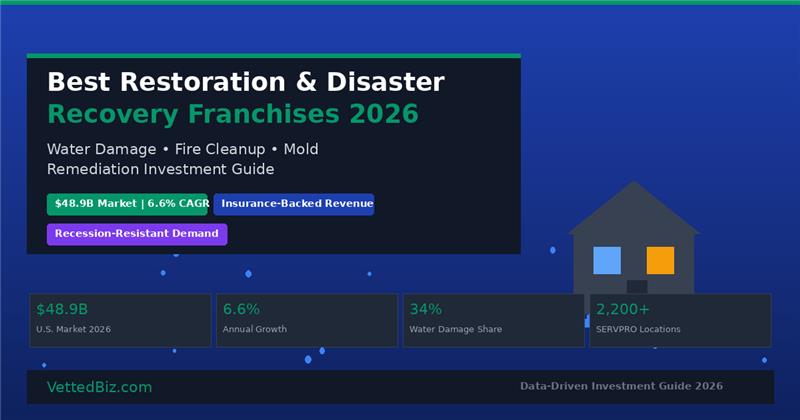
The U.S. disaster restoration services market is estimated to reach $48.9 billion in 2026 and is projected to nearly double to $89.1 billion by 2036, growing at a 6.6 percent CAGR according to Fact.MR. FEMA issued more major disaster declarations between 2020 and 2024 than in any comparable five-year period on record, and this pattern shows no signs of slowing. For entrepreneurs seeking a business model with strong demand fundamentals and insurance-backed revenue, restoration franchises deserve serious consideration.
In this data-driven guide, we break down the top restoration franchises by investment level, compare revenue potential across the category, and help you identify which opportunity best fits your goals and budget.
Why Restoration Franchises Are Thriving in 2026
Climate-Driven Demand Is Accelerating
The connection between extreme weather and restoration demand is direct and measurable. Hail, high winds, flooding, and hurricane damage have become more frequent and more severe across most U.S. markets. Each major storm generates thousands of individual restoration jobs, water extraction, structural drying, debris removal, smoke and soot cleanup, and rebuilding. Unlike discretionary home improvements, restoration work cannot be postponed. When a pipe bursts at two in the morning or a wildfire damages a neighborhood, homeowners and businesses need immediate professional response.
Water damage restoration alone represents approximately 34 percent of the total market share in 2026, making it the single largest service segment. The global water damage restoration market was valued at $10.4 billion in 2023 and is projected to grow at a 6.2 percent CAGR through 2030, with the U.S. segment expected to reach $6.1 billion by 2026.
Insurance-Backed Revenue Model
One of the most compelling aspects of restoration franchises is the payment structure. Unlike many home services categories where franchisees collect directly from price-sensitive homeowners, a significant portion of restoration revenue flows through insurance claims. This creates several advantages: higher average ticket values, more predictable collections, and reduced sensitivity to consumer spending fluctuations. Top restoration franchises train their operators extensively on insurance claims processes and adjuster relationships, which becomes a powerful competitive moat.
Recession-Resistant Fundamentals
Disasters do not wait for favorable economic conditions. Pipes freeze in recessions, storms hit during market downturns, and mold grows regardless of GDP growth. The property restoration industry generates over $210 billion in annual revenue across all segments and is widely considered one of the most recession-resistant sectors in home services. This counter-cyclical resilience makes restoration franchises particularly attractive to investors seeking stability.
Top Restoration Franchises: Investment Comparison
SERVPRO, The Industry Leader
SERVPRO has been the dominant force in restoration franchising for over four decades. Named to Entrepreneur's Franchise 500 for 41 consecutive years, the brand secured the number one ranking in the restoration services category for the 23rd straight year in 2026. With more than 2,200 franchises just in the U.S., up 12 percent over the past three years, SERVPRO's scale provides unmatched brand recognition and national account relationships.
911 Restoration, Best Value Entry Point
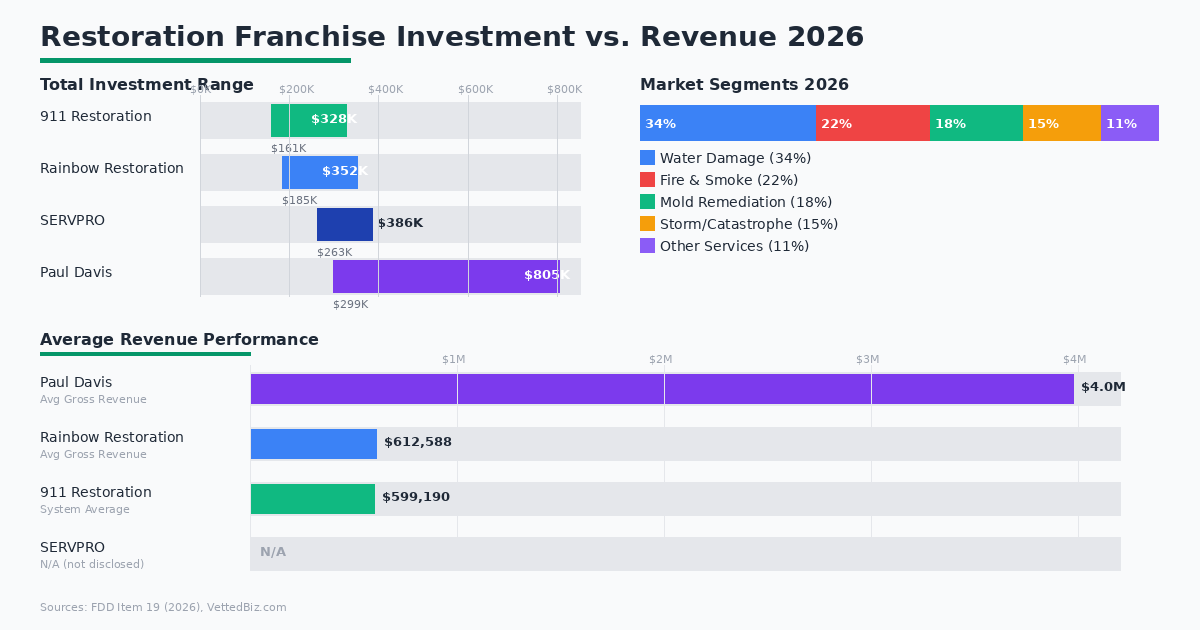
911 Restoration positions itself as the most accessible entry point into the restoration franchise space, offering a lower franchise fee and total investment while maintaining comprehensive service capabilities. Per the last FDD Item 19, 911 Restoration reports a system-wide average annual gross revenue of $599,190.
Paul Davis Restoration, Premium Full-Service Model
Paul Davis Restoration offers the most comprehensive service menu in the category, covering emergency services, reconstruction, contents restoration, and environmental services under a single brand. The franchise targets both residential and commercial markets and has built a reputation for handling complex, high-value projects.
Rainbow Restoration (Neighborly), Platform Advantages
As part of the Neighborly home services platform, the world's largest with 28 brands and nearly 5,500 franchise locations, Rainbow Restoration benefits from cross-brand referrals, shared digital marketing infrastructure, and a sophisticated national demand generation engine.
Key Market Segments and Revenue Opportunities
Water Damage Restoration
Water damage is the bread and butter of the restoration industry, accounting for 34 percent of total market share in 2026. Services include water extraction, structural drying, dehumidification, and flood cleanup. The U.S. water damage restoration segment alone is projected at $6.1 billion. Average job tickets typically range from $3,000 to $12,000 for residential projects, with commercial water losses frequently exceeding $50,000.
Fire and Smoke Damage Restoration
Fire damage restoration involves smoke and soot removal, odor elimination, structural cleaning, and content restoration. These projects carry higher average ticket values, often $15,000 to $75,000 for residential fires, and longer project timelines that generate sustained revenue. The increasing frequency of wildfires in western states has expanded this segment significantly.
Mold Remediation
The mold remediation market exceeds $10 billion and is driven by water damage follow-on work, aging housing stock, and increasingly strict indoor air quality standards for commercial properties. Mold remediation often represents high-margin ancillary revenue for restoration franchises, as it frequently follows water damage mitigation.
Storm and Catastrophe Response
Large-scale storm events create concentrated demand surges that can transform annual revenue for restoration franchisees in affected markets. Franchises with national coordination capabilities, like SERVPRO's Storm Team and Paul Davis's catastrophe response program, can deploy resources to disaster zones and capture significant additional revenue beyond their home territories.
Financial Benchmarks for Restoration Franchises in 2026
What to Consider Before Investing
Licensing and Certification
Restoration franchises require industry-specific certifications, most notably from the Institute of Inspection, Cleaning and Restoration Certification (IICRC). Key certifications include Water Damage Restoration Technician (WRT), Fire and Smoke Restoration Technician (FSRT), and Applied Microbial Remediation Technician (AMRT). Most franchisors include initial certification training in their onboarding programs.
24/7 Operations Commitment
Restoration is inherently an emergency-response business. Franchisees must be prepared for after-hours calls, weekend mobilizations, and rapid deployment during storm events. While this creates a demanding lifestyle during the early growth phase, successful operators eventually build teams and management layers that handle emergency response without direct owner involvement.
Territory Selection
Markets with older housing stock, frequent weather events, and higher property values tend to generate the strongest restoration demand. Coastal markets, flood-prone regions, and areas with extreme temperature swings present particularly strong opportunities. Review FEMA historical data and local climate patterns when evaluating territories.
Insurance Industry Relationships
Success in restoration franchising is closely tied to relationships with insurance adjusters, agents, and property managers. The most successful franchisees invest heavily in networking with the insurance community and maintaining preferred vendor status with major carriers.
Conclusion
Restoration and disaster recovery franchises represent a compelling investment opportunity in 2026, backed by powerful structural tailwinds that show no signs of weakening. With a $48.9 billion U.S. market growing at 6.6 percent annually, insurance-backed revenue streams, and recession-resistant demand fundamentals, this sector offers one of the strongest risk-adjusted return profiles in franchising.
Whether you enter at the $161,000 level with 911 Restoration or invest over $800,000 in a full-service Paul Davis operation, the restoration industry rewards operators who can deliver rapid response, quality workmanship, and strong insurance relationships. The key is matching your investment capacity, management experience, and market conditions to the right brand.
Ready to explore restoration franchise opportunities? Visit VettedBiz.com to compare franchise performance data, review FDD insights, and connect with franchise advisors who can help you make a confident investment decision.
Get insider access to franchise insights
Subscribe to receive expert tips, franchise rankings, and exclusive data straight to your inbox, trusted by thousands of aspiring business owners and investors.
Franchise resources & insights
Explore expert guides, data-driven articles, and tools to help you make smarter franchise decisions, whether you're just starting out or ready to invest.