Best Pet Care Franchises to Own in 2026: A Complete Investment Guide
Best Pet Care Franchises to Own in 2026: A Complete Investment Guide
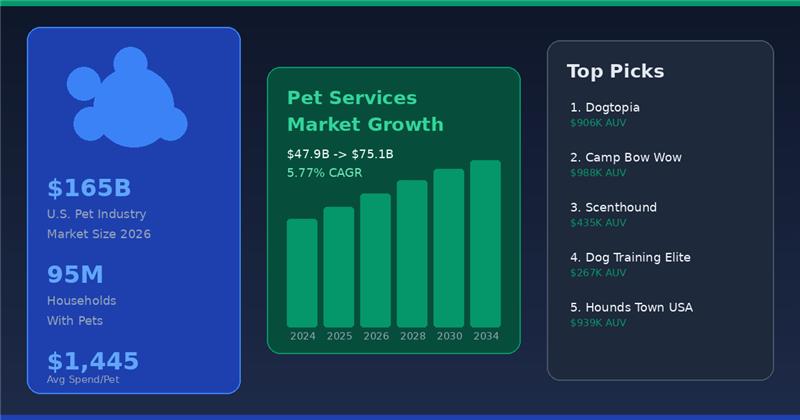
The American love affair with pets has turned into one of the most resilient investment themes in franchising. With U.S. pet industry expenditures projected to reach $165 billion in 2026 and 95 million households sharing their homes with at least one furry companion, the demand for professional pet services has never been stronger. For entrepreneurs looking to combine passion with profit, pet care franchises offer a compelling entry point into business ownership.
Unlike discretionary spending categories that contract during economic downturns, pet care has proven remarkably recession-resistant. Pet owners consistently prioritize their animals' wellbeing, driving steady revenue for daycare, grooming, boarding, and training businesses even when other consumer spending tightens. This guide breaks down the top pet care franchise opportunities available in 2026, comparing investment requirements, revenue potential, and the key factors that separate strong performers from the rest.
The Pet Care Industry in 2026: Market Overview
The numbers behind the pet care sector tell a story of sustained, structural growth. According to the American Pet Products Association (APPA), the U.S. pet industry generated $158 billion in total expenditures in 2025 and is on track to surpass $165 billion in 2026, reflecting a compound annual growth rate (CAGR) of roughly 6.6%. By 2031, analysts at Mordor Intelligence project the market will approach $228 billion.
Within this broad market, pet services represent the fastest-expanding segment. Fortune Business Insights values the global pet services market at $47.91 billion in 2026, forecasting growth to $75.08 billion by 2034 at a 5.77% CAGR. The U.S. pet daycare sub-segment alone is expected to reach approximately $2.85 billion by 2030, growing at an aggressive 8.78% CAGR.
Average annual household spending on pets in the United States is projected to reach $1,445 per pet in 2026 and climb to $1,733 by 2030. This rising per-pet expenditure reflects a broader humanization trend: owners increasingly view their pets as family members deserving of premium care, enrichment activities, and preventive health services.
Pro Tip: The pet care sector has outperformed broader retail spending growth in each of the last five years. Franchises that bundle multiple services (daycare, grooming, training) capture a larger share of each household's annual pet budget.
Top 5 Pet Care Franchise Opportunities for 2026
1. Dogtopia — Premium Dog Daycare and Spa
Dogtopia has cemented its position as the leading dog daycare franchise in North America, ranking #2 in Entrepreneur's Franchise 500 pet category for 2025. The brand operates more than 290 locations across the U.S. and Canada, with a wellness-first approach that includes open-play daycare, spa services, and boarding.
According to Dogtopia's most recent FDD, the total initial investment ranges from $543,000 to $1.4 million, including a $50,000 franchise fee. Franchisees pay a 7% royalty on gross sales plus a 2% advertising fund contribution. The median Average Unit Volume (AUV) across 263 reporting U.S. locations stands at $906,000, with top-performing units exceeding $1.3 million in annual revenue. Estimated EBITDA margins fall between 30% and 40%, making Dogtopia one of the most profitable models in the pet franchise space.
What sets Dogtopia apart is its proprietary wellness platform, which includes webcam access for owners, individualized report cards for each dog, and a structured socialization program. The brand's emphasis on safety certifications and staff training creates a moat that smaller, independent daycares struggle to replicate.
2. Camp Bow Wow — Daycare, Boarding, and Training
Camp Bow Wow is one of the most recognized names in pet franchising, with over 200 locations across the United States. The franchise offers a comprehensive suite of services including dog daycare, overnight boarding, in-home pet care through its Home Buddies division, and dog training programs.
The 2025 FDD discloses a total initial investment of $1.22M to $2.04M, with a $50,000 franchise fee. Ongoing royalties are 7% of gross sales plus a 2% advertising fee. The median gross sales across all 223 reporting locations reached $988,140 in 2024, with the top 25% of franchisees reporting a median of $1,381,072. Estimated operating margins range from 25% to 35%.
Camp Bow Wow's competitive advantage lies in its diversified revenue model. By combining daycare, overnight boarding, and ancillary services under one roof, franchisees capture multiple touchpoints of pet-owner spending throughout the year, including peak holiday boarding seasons that can drive significant revenue spikes.
3. Scenthound — Wellness-Focused Dog Grooming
Scenthound is disrupting the traditional grooming model by positioning itself as a routine wellness provider rather than a cosmetic grooming salon. Founded in 2015 and franchising since 2018, the brand focuses on recurring monthly memberships that cover essential care: skin, coat, ears, nails, and teeth. This membership model generates predictable, recurring revenue for franchisees.
The total estimated investment ranges from $328,000 to $550,000, with a franchise fee of approximately $49,000. Royalties are 6% of gross sales plus a 2% brand fund. Scenthound's lower buildout costs compared to daycare concepts make it an attractive option for first-time franchisees or those seeking a smaller footprint model. The membership-driven structure supports monthly recurring revenue, which improves cash flow predictability.
4. Dog Training Elite — In-Home Training, Low Overhead
Dog Training Elite earned the #3 spot in Entrepreneur's 2025 Franchise 500 pet category thanks to its explosive growth and capital-efficient model. Unlike brick-and-mortar pet franchises, Dog Training Elite operates as a mobile, in-home service, meaning franchisees avoid the six- and seven-figure buildout costs associated with physical locations.
Total initial investment ranges from approximately $174,000 to $203,000, including the franchise fee. This makes it one of the most accessible entry points in the pet franchise category. The brand's personalized, in-home training approach addresses a growing demand for behavioral services as pet ownership surges and owners seek convenient solutions that fit their schedules.
5. Hounds Town USA — Cage-Free Daycare and Boarding
Ranked #5 in Entrepreneur's pet category, Hounds Town USA differentiates itself with a cage-free philosophy and a no-frills, value-oriented model. The brand emphasizes an authentic, dog-centric experience over premium aesthetics, which keeps buildout and operating costs lower than competitors while maintaining strong customer loyalty.
Total investment is estimated between $476,000 and $1.28M, with a franchise fee of $49,000. Hounds Town's lean operating model and focus on operational simplicity make it particularly appealing to owner-operators who want to be hands-on in the business. The brand has seen consistent unit growth, reflecting strong franchisee satisfaction and territory demand.

What Makes Pet Care Franchises Attractive in 2026
Recession-Resistant Demand
Pet care spending has demonstrated consistent resilience during economic downturns. During the 2008–2009 recession and the 2020 pandemic disruptions, pet industry expenditures continued growing while many other consumer categories contracted. Pet owners routinely rank their animals' care among their last discretionary cuts, creating a demand floor that protects franchise revenue even in uncertain economic climates.
Recurring Revenue Models
Many modern pet franchises are built around subscription or membership models. Daycare passes, monthly grooming memberships, and training packages generate predictable recurring revenue that smooths cash flow and improves business valuations. Scenthound's membership model and Dogtopia's daycare pass system are prime examples of this trend toward predictable, subscription-based income.
Demographic Tailwinds
Several demographic forces are converging to accelerate pet care spending. Millennials and Gen Z, now the largest pet-owning cohorts, spend significantly more per pet than previous generations. The rise of remote and hybrid work has increased pet adoption rates, while dual-income households with smaller families channel more disposable income toward pet services. Additionally, the pet humanization trend shows no signs of slowing, with owners increasingly seeking premium, personalized services for their animals.
Multiple Revenue Streams
Top-performing pet franchises capture revenue from multiple service lines. A single facility might offer daycare, boarding, grooming, training, retail product sales, and birthday party packages. This diversification reduces dependence on any single revenue source and increases the average lifetime value of each customer relationship.
Key Factors to Evaluate Before Investing
Choosing the right pet care franchise requires careful due diligence beyond comparing franchise fees and royalty rates. Prospective franchisees should evaluate several critical factors that influence long-term success.
Territory Analysis and Local Competition
Understanding the competitive landscape in your target market is essential. Analyze the density of existing pet care providers, local pet ownership rates, household income levels, and population growth trends. Markets with high pet ownership, strong household incomes, and limited existing professional pet service options represent the best opportunities.
FDD Review and Validation
Item 19 of the Franchise Disclosure Document, which covers financial performance representations, is the single most important section for prospective investors. Not all franchisors include Item 19 data, but those that do provide a transparent window into unit economics. Cross-reference FDD data with conversations with existing franchisees listed in Item 20. Speaking with at least 10 current operators before signing a franchise agreement is considered best practice in the industry.
Franchisor Support Infrastructure
Evaluate the franchisor's training program length and depth, ongoing operational support, marketing assistance, technology platform, and real estate/site selection guidance. Strong franchise systems invest heavily in franchisee success because their royalty-based revenue model depends on healthy unit economics across the network.
Pro Tip: Always request a copy of the franchisor's FDD at least 14 days before signing any agreement or paying any fees. This is your legal right under FTC franchise rules. Use that time to have the document reviewed by a franchise attorney.
Conclusion: Is a Pet Care Franchise Right for You?
Pet care franchises represent one of the strongest investment themes in franchising heading into the second half of 2026. The sector benefits from structural tailwinds including a $165 billion domestic market, rising per-pet spending, recession-resistant demand patterns, and a demographic shift toward premium pet services. Whether you are drawn to Dogtopia's premium daycare model, Scenthound's recurring-revenue grooming concept, or Dog Training Elite's low-overhead mobile approach, the pet franchise landscape offers options across a wide range of investment levels and operating styles.
The most successful pet care franchisees share a genuine passion for animals, strong local marketing skills, and a willingness to follow the franchisor's proven systems. If those qualities describe you, the data suggests that 2026 may be an excellent time to explore pet franchise ownership. Visit VettedBiz.com to compare franchise opportunities side by side and access FDD-backed data to guide your decision.
Get insider access to franchise insights
Subscribe to receive expert tips, franchise rankings, and exclusive data straight to your inbox, trusted by thousands of aspiring business owners and investors.
Franchise resources & insights
Explore expert guides, data-driven articles, and tools to help you make smarter franchise decisions, whether you're just starting out or ready to invest.