Best Childcare and Child Development Franchises in 2026

Childcare is not just a business. It is a $75 billion industry that keeps growing even when the rest of the economy slows down. While conversations about recession-proof franchises often center on home services or fast food, the childcare sector quietly outperforms nearly every other franchise category in one critical metric: demand stability.
Here is the paradox driving that demand: birth rates in the United States are at a 30-year low, yet the childcare industry is booming. The explanation is straightforward. Dual-income households are now the norm, not the exception, and the cost of childcare reflects a structural shortage of supply. According to Care.com, the majority of American families spend more than 10% of their household income on childcare, with weekly nanny costs reaching as high as $827. For franchise investors, this imbalance between supply and demand creates a rare opportunity: a sector where customers need your service, will pay premium prices for quality, and will stay enrolled for years.
The timing is especially compelling in 2026. The IFA's Economic Outlook projects the child services sector to grow at 3.2% this year, nearly double the overall franchise establishment growth rate of 1.5%. Private equity firms are accelerating their investments in the space. And on March 24, 2026, KidStrong announced a strategic investment from Princeton Equity Group, a firm managing approximately $1.6 billion in assets.
In this guide, we break down the top childcare and child development franchise opportunities for 2026, compare investment costs and financial performance, and help you evaluate which model fits your goals and capital.
Why Childcare Franchises Are Outperforming in 2026
Dual-income households create non-negotiable demand. Childcare is not discretionary spending. Working parents do not stop enrolling their children because of a stock market dip or rising interest rates. This gives childcare franchises a level of revenue stability that most consumer-facing businesses cannot match.
Supply remains chronically short. Across the country, waitlists at quality childcare centers are measured in months, not weeks. Regulatory requirements around licensing, staffing ratios, and facility standards create meaningful barriers to entry for independent operators. Franchise systems that have already navigated these complexities offer a significant structural advantage.
Recurring, predictable revenue. Childcare is not a one-time transaction. Families enroll for years. Monthly tuition payments create subscription-like cash flow that supports consistent financial performance and more predictable business planning.
Institutional capital is flooding in. Private equity firms have identified childcare as a high-growth, recession-resistant franchise category. Princeton Equity Group's investment in KidStrong, announced March 24, 2026, is the latest in a growing trend. This kind of institutional validation typically signals strong underlying unit economics and scalable growth potential.
The IFA's fastest-growing sector. Child services franchises are projected to grow at 3.2% in 2026, making them the fastest-growing sector alongside commercial and residential services. That rate significantly outpaces the broader franchise industry.
Top Childcare Franchise Opportunities Compared
The Goddard School — Premium Early Education
The Goddard School is the category leader in early childhood education franchising, with over 640 schools across 38 states. Founded in 1988, the brand has been ranked the No. 1 childcare franchise in the United States by Entrepreneur magazine every year since 2002. The Goddard School offers a proprietary play-based curriculum (F.L.EX.) for children from six weeks to six years old, and its dual-management model allows franchisees to focus on business operations while an on-site Education Director handles curriculum and teacher development.
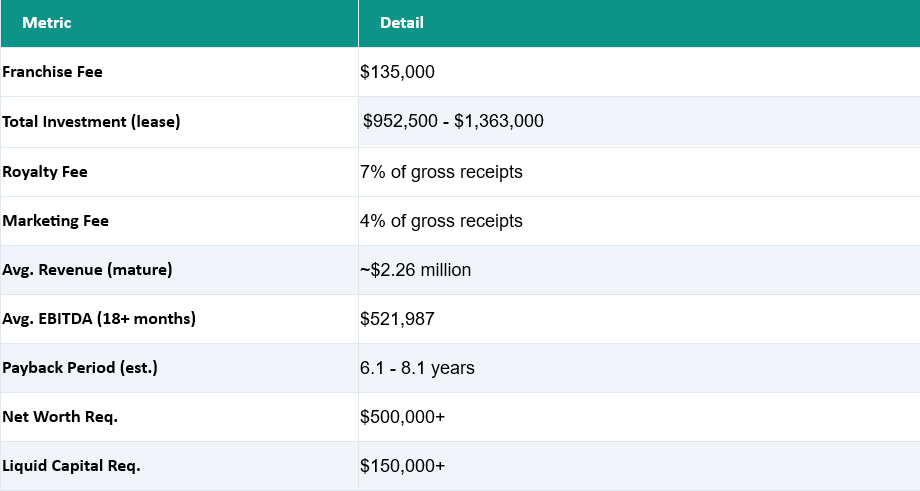
Why it stands out: The Goddard School's financial performance data is among the most transparent in the childcare space, with detailed Item 19 disclosures. The average EBITDA of $521,987 for mature locations represents strong returns for a mission-driven business, and the 640+ unit footprint provides brand recognition that accelerates enrollment in new markets.
KidStrong — Science-Based Child Development
KidStrong is the breakout franchise story in child development. Founded in 2015 in Frisco, Texas, the brand offers science-based fitness and development programs for children up to age 11, designed by child development experts, occupational therapists, and sports performance specialists. Each week, children participate in 45-minute classes focused on building physical, emotional, and cognitive skills.
The brand began franchising in 2019 and has scaled to 131 centers supporting more than 85,000 members. On March 24, 2026, KidStrong announced a strategic investment from Princeton Equity Group, a firm managing approximately $1.6 billion in assets.
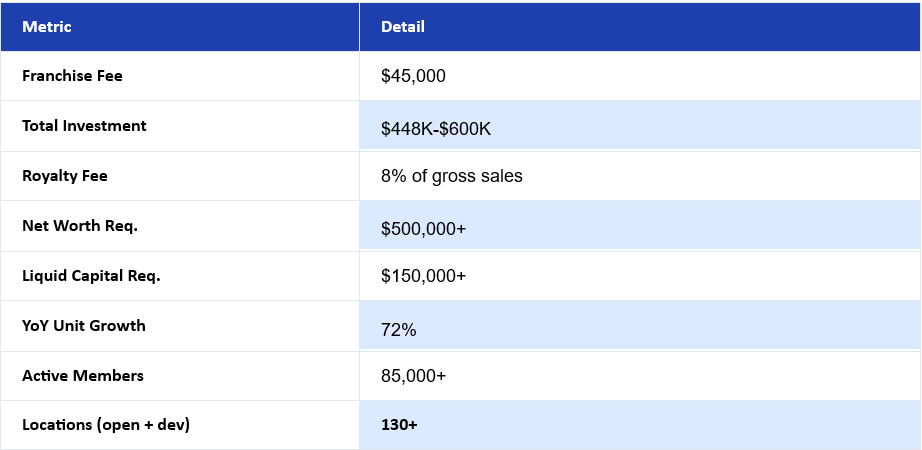
Why it stands out: KidStrong operates a membership-based enrichment model, not full-day daycare, which means lower buildout costs, smaller square footage, and no nap rooms or cafeterias. The lower investment threshold makes it accessible to more investors. The Princeton Equity backing validates the unit economics and growth trajectory, and 72% year-over-year unit growth is among the highest in any franchise category.
Lightbridge Academy — Circle of Care Model
Lightbridge Academy has been operating for over 27 years and has emerged as one of the fastest-growing daycare franchise opportunities in the country. The brand currently operates more than 80 locations, with additional centers under development. Lightbridge provides full-day care and early education for children ages six weeks through kindergarten, plus extended programming for children up to age 10.
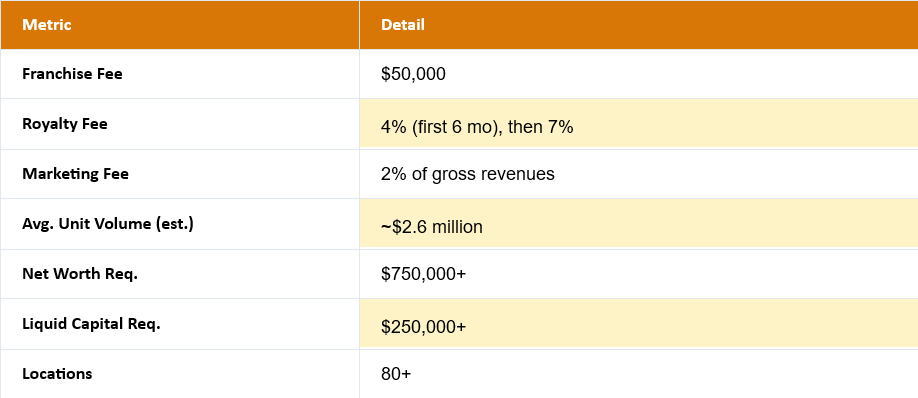
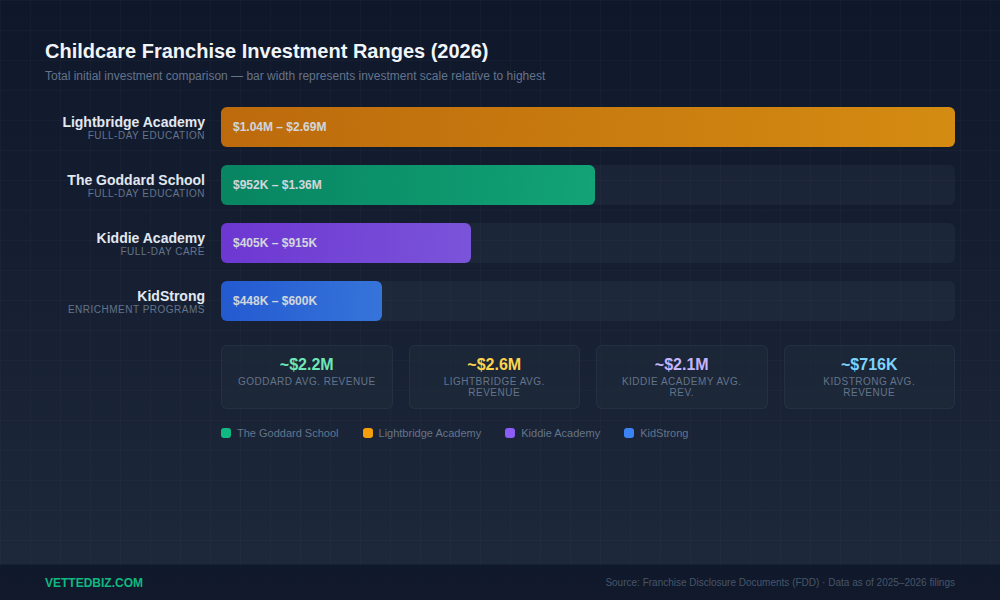
Why it stands out: Lightbridge Academy's average unit volume of $2.6 million for established centers is among the highest in the childcare franchise space. The brand differentiates through technology-driven parent engagement, extended operating hours, and strong development support from site selection through operations. Unlike some larger childcare franchises that have sold out most prime territories, Lightbridge is actively opening new markets.
Kiddie Academy — Established National Footprint
Kiddie Academy is one of the most established names in educational childcare franchising, with approximately 345 locations across 39 states and Washington, D.C., plus more than 75 additional locations in development. The brand focuses on a whole-child curriculum blending education and care for children from six weeks to 12 years old, including full-time care, preschool, and before- and after-school programs.
Why it stands out: Kiddie Academy's national scale and established reputation make it a strong option for investors who prioritize brand recognition and operational maturity. The brand's long track record provides extensive Item 20 data (openings, closures, transfers) that helps prospective franchisees evaluate system health.
Side-by-Side Investment Comparison
Traditional Childcare vs. Enrichment Models: Which Is Right for You?
Traditional childcare (Goddard School, Lightbridge Academy, Kiddie Academy) involves operating a licensed childcare facility that serves children for full or partial days. These models typically generate higher per-unit revenue ($2M+) because tuition is paid monthly for daily care. However, they require larger facilities (8,000-15,000+ square feet), more staff, and compliance with extensive state licensing requirements. Capital requirements are higher, but revenue is also more substantial and highly recurring.
Enrichment models (KidStrong and similar concepts) offer supplemental programming, typically one to three sessions per week, focused on fitness, development, STEM, or arts. These models require smaller spaces (2,000-4,000 square feet), fewer employees, and lower buildout costs. Revenue per unit is typically lower than full-day childcare, but margins can be competitive because of the lighter operational footprint. The trade-off is that customer retention can be less predictable since enrichment is closer to discretionary spending.
For investors with $300K-$700K who want a lighter operational model, enrichment franchises like KidStrong offer an attractive entry point. For investors with $1M+ who want high-revenue, high-community-impact businesses, traditional childcare franchises offer stronger revenue ceilings and deeper competitive moats.
What to Evaluate Before Investing in a Childcare Franchise
Licensing and regulatory requirements. Every state has different childcare licensing requirements covering staff-to-child ratios, facility specifications, background checks, health and safety standards, and ongoing inspections. These regulations create barriers to entry for competitors but also add complexity to your launch timeline and operating costs.
Staffing challenges. The childcare industry faces persistent labor shortages. Qualified teachers and caregivers are in high demand and short supply, particularly in high cost-of-living markets. Evaluate the franchisor's training programs, recruitment support, and compensation guidance.
Enrollment ramp-up timeline. Unlike a restaurant that can generate revenue on day one, childcare centers typically require 12-24 months to reach full enrollment and stable profitability. Model your cash flow conservatively and ensure you have sufficient working capital to cover pre-revenue and ramp-up costs.
Location and demographics. Childcare demand is intensely local. Evaluate the density of dual-income households, median household income, existing childcare supply, and population growth trends in your target area.
FDD review. Scrutinize Item 19 (financial performance data), Item 20 (openings, closures, and transfers), and Item 21 (franchisor financial statements). Contact current and former franchisees listed in Item 20. Ask about their actual enrollment timeline, staffing experience, and whether the franchisor delivered on its promises.
The Bottom Line
Childcare and child development franchises represent one of the most compelling investment categories in 2026. The combination of structural demand, recession resistance, recurring revenue, and accelerating institutional investment creates conditions that few other franchise sectors can match.
The Goddard School leads on brand recognition, financial transparency, and proven unit economics. KidStrong offers the most exciting growth story with a lower investment threshold and a differentiated enrichment model now backed by Princeton Equity Group. Lightbridge Academy delivers strong revenue per unit and active territory expansion. And Kiddie Academy provides the stability of a large, established system.
Start by requesting FDDs from multiple brands, comparing the data side by side, and speaking with current franchisees in your target market. For detailed franchise data, risk scores, and tools to support your evaluation, explore the VettedBiz franchise research platform at www.vettedbiz.com.
Get insider access to franchise insights
Subscribe to receive expert tips, franchise rankings, and exclusive data straight to your inbox, trusted by thousands of aspiring business owners and investors.
Franchise resources & insights
Explore expert guides, data-driven articles, and tools to help you make smarter franchise decisions, whether you're just starting out or ready to invest.